Section 1: Operating & Financial Policies
Hours of Operation
Days: Monday – Friday
Time: 5:30 AM – 3:30 PM
Tuition & Rates
Our program is committed to transparency and high-quality care. Tuition is billed monthly for ongoing enrollment and is due in full on the 1st of every month to ensure consistent placement. We offer both full-time and part-time enrollment options based on availability.
Drop-In Care
We offer drop-in care on a space-available basis for families requiring occasional support.
Rate: $25.00 per hour (Siblings are an additional $5.00 an hour per child. ex: child A. $25.00, Child B: $5.00)
Payment Policy: Payment is due in full at the time of drop-off.
Availability: Please confirm space availability at least 24 hours in advance.
ERDC Monthly Reimbursement Rates
For families utilizing ERDC subsidies, we follow all state requirements for rate billing based on authorized hourly tiers (Part-Time 63–135 hours vs. Full-Time 136+ hours). You can view the official Department of Early Learning and Care provider rate guidelines online here: https://www.oregon.gov/delc/providers/pages/erdc-providers.aspx
Late Pick-Up Policy
Our program concludes promptly at 3:30 PM. While we understand that unforeseen circumstances can occasionally arise, timely pick-ups are essential to respect our operational hours and the personal commitments of our staff.
Grace Period: A 5-minute grace period is provided.
Late Fee: If a child is picked up after 3:35 PM, a late fee of $1.00 per minute, per child, will be charged. This fee is payable in full at the time of pick-up.
Habitual Lateness: We value consistency. Please note that three late pick-ups within a three-month period will result in a formal review of your enrollment agreement, which may lead to the termination of care.
Section 2: Health, Medication, & Allergy Policies
The health and safety of every child in our care is our top priority. To ensure we can provide the best possible support, we require comprehensive information and clear communication regarding all health needs.
Enrollment Documentation: Before your child’s first day, you must provide complete medical and allergy documentation. This includes any necessary individualized care plans for chronic conditions, which must be updated at least annually or whenever there is a change in your child's health status.
Medication Administration: Authorization: All medications (prescription or over the counter) require a signed, dated, written authorization form on file, including specific dosage instructions, dates/times for administration, and the reason for the medication.
Original Containers: All medications must be provided in their original, pharmacy-labeled container. Prescription labels must include the child’s name, the date the prescription was filled in, the prescribing physician’s name, and clear dosage instructions. We cannot administer expired medication.
Documentation: Per state requirements, we maintain a daily log for every medication administered. This log tracks the child's name, type of medication, date, time, dosage, any observed side effects, and the signature of the staff member administering the dose. We will inform you daily when any medication has been given.
Non-Medical Topical Products: Items such as sunscreen, diaper cream, and insect repellent do not require daily documentation but are subject to the following rules:
Annual Authorization: We require annual written parental authorization to apply these products.
Manufacturer’s Instructions: Products must be used as needed and strictly according to the manufacturer's instructions.
Labeling: If you provide your own product, it must be clearly labeled with your child's first and last name and will be used exclusively for your child.
Storage: All medications are kept securely in accordance with state law—stored under a child-safety lock or in a locked room, inaccessible to children. Medications requiring refrigeration are kept in a separate, tightly covered, leakproof container clearly marked medication.
Compliance Note: Our policies are designed to comply with the Oregon Department of Early Learning and Care (DELC) standards, specifically OAR Chapter 414. For the most current information regarding these state regulations, please visit www.oregon.gov/delc
Section 3: Daily Routine & Curriculum
Our program is built around a warm, Montessori-inspired environment that nurtures child-led exploration, independence, and practical life skills. We balance focused learning with daily outdoor nature discovery. To help children feel safe and confident, we use Tucker the Turtle steps for emotional regulation and Suri Spider strategies for working through peer problems together. School-age children arrive right off the afternoon bus to a welcoming space where they can grab a snack and unwind after a busy school day.
Section 4: Behavior Guidance
Our approach to guidance and behavior support is rooted in the Pyramid Model framework, formally known as Positive Behavioral Interventions and Supports (PBIS). This evidence-based, trauma-informed approach focuses on building positive relationships, creating a supportive environment, teaching social-emotional skills, and providing individualized support when children need extra help.
Positive child guidance techniques are used to assist children with learning self-control and positive social skills. Conflict situations are handled with empathy and redirection. Strong communication with parents is also a top priority. Only registered providers, staff, and approved substitutes shall provide guidance or discipline to childcare children; volunteers never provide guidance or discipline.
A focus on prevention and positive guidance techniques will include:
Modeling appropriate behavior for the children
Listening to the children
Giving acceptable choices whenever possible
Encouraging the children and using descriptive praise
Noticing when the children are making safe and/or appropriate choices
Setting age-appropriate limits for the children
Modifying the classroom environment to attempt to prevent problems before they occur
Ignoring minor misbehaviors
Practicing social situations through role playing common issues/scenarios
Explaining things to the children at their level
Providing children with natural and logical consequences for their behavior
Planning for successful transitions
Explaining expectations ahead of time
Using short, supervised periods of "time out," / calm down time only when/if necessary
We guide children gently through big feelings and social challenges using proven, child-friendly tools like Tucker the Turtle for emotional self-regulation and Suri Spider strategies for cooperative problem-solving during peer interactions.
Prohibited Discipline & Corporal Punishment
There are no exemptions for the use of corporal punishment in childcare, and parents cannot authorize or grant permission for the use of any prohibited punishment. We strictly prohibit any form of corporal punishment or child maltreatment, including but not limited to:
Hitting, slapping, shaking, striking with a hand or instrument, pinching, tying or binding, or inflicting any other form of physical discipline
Mental or emotional punishment, including name-calling, ridicule, yelling, or threats
Non-prescription chemical restraints used for discipline or to control behavior
Confining a child in an enclosed area, such as a locked or closed room, closet, or box
Forcing or withholding meals, snacks, rest, or necessary toilet use
Belittling a child for, or forcing a child to clean up after, toileting accidents
Compliance & State Regulations
You can review the official state guidance framework via the Oregon DELC Rule Guidance PTA-0438 for Behavior and Guidance Policies. For additional regulatory information, contact the Child Care Licensing Division at 503-947-1400 or visit www.oregon.gov/delc.
Section 5: Inclusion & Family Support
Commitment to Inclusion
We are deeply committed to fostering a welcoming, equitable environment that embraces every child and family. Our program actively celebrates and includes all races, cultures, backgrounds, family structures, and abilities. Every child deserves to feel seen, valued, and safe to learn and grow just as they are.
Partnership with Families We believe that positive guidance works best when home and childcare go hand in hand. If a child is going through a tough phase or needs extra support, we will always reach out to partner with you so we can create a consistent, supportive plan together.
Section 6: Health, Safety & Medical Policies
At Busy Bees of Troutdale, the health, safety, and well-being of every child is our highest priority. In compliance with the regulations set forth by the Oregon Department of Early Learning and Care (DELC), we maintain rigorous health, safety, sanitation, and medical protocols to ensure a secure environment.
Health Standards & Illness Guidelines
To maintain a healthy environment for all children and staff, children must stay home if they show signs of a contagious illness or are unable to comfortably participate in routine program activities.
When to Stay Home: Children must be kept home if they have a fever, active vomiting or diarrhea, persistent coughing, undiagnosed rashes, or signs of communicable diseases.
Return to Care: Children must be completely symptom-free without the aid of fever-reducing medication for at least 24 hours before returning to the program.
Illness During Care: If a child becomes ill while in our care, we will contact parents or emergency contacts immediately for prompt pick-up to prevent the spread of illness.
Medication Administration
Written Authorization: Parents must complete and sign a detailed medication authorization form providing explicit instructions for dosage, timing, and administration.
Proper Labeling: All medication must be in its original packaging, clearly labeled with the child's full name, expiration date, and prescription details (if applicable).
Safe Storage: Medications are stored safely out of the reach of children, in a designated secure container or refrigerator as required.
Section 7: Nutrition, Snacks & Meal Safety
We provide nutritious snacks and balanced meals throughout the day. However, to best accommodate specialized diets, specific food preferences, or allergy management, we encourage families to pack meals and snacks directly from home.
Food Safety & Hygiene: All food preparation, handling, and serving practices follow strict sanitation standards, including proper handwashing before and after meals.
Allergies & Dietary Restrictions: We maintain strict awareness of each child's documented food allergies or medical dietary needs. Meals and snacks are carefully monitored to protect children with severe food allergies.
Handwashing & Environmental Sanitation
Handwashing Protocol: Frequent handwashing is enforced for both children and staff, specifically upon arrival, before and after eating, after using the restroom or diapering, and after outdoor activities or messy play.
Cleaning & Disinfecting: Toys, high-touch surfaces, and equipment are cleaned and sanitized regularly using state-approved, child-safe disinfecting solutions to prevent the spread of germs.
Section 8: Emergency Preparedness & Safety Plan
Program Floor Plan & Safety Layout
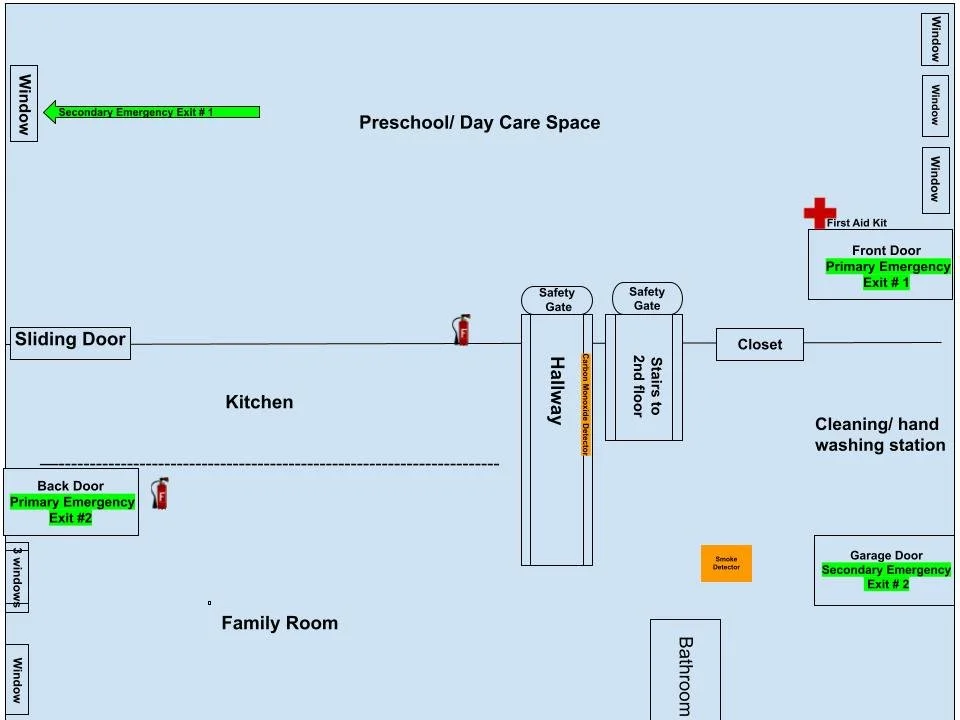
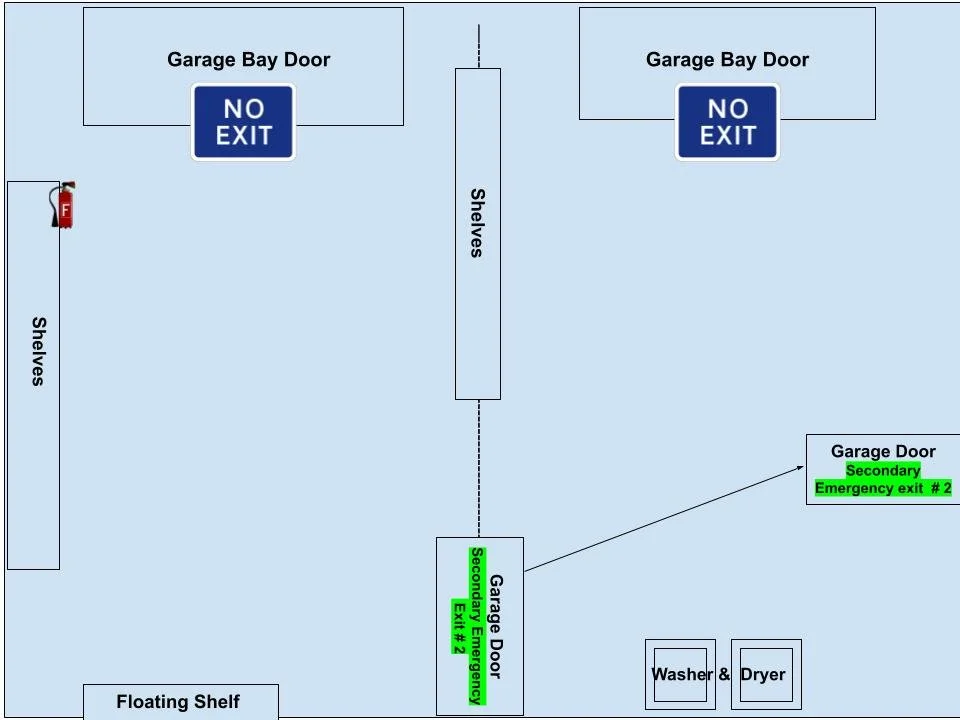
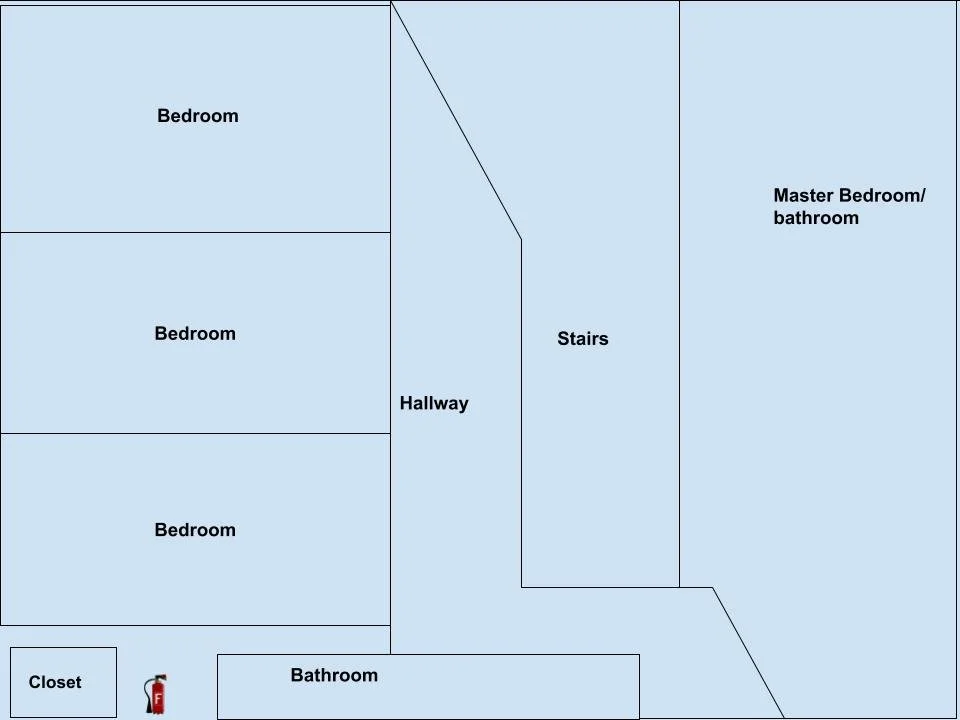
Our facility layout is designed for optimal safety and supervision. As shown on our written floor plan, the home features two primary exits and two secondary exits. Safety equipment is strategically placed throughout the facility, including fire extinguishers on every level (upstairs, downstairs, and in the garage), a first aid kit located by the front door, and smoke and carbon monoxide detectors installed on all floors. Additionally, baby gates are utilized to block off areas that should not be accessed by daycare children unless accompanied by an adult.
Evacuation & Safe Areas (Primary Outdoor Assembly & Alternate Shelters): Evacuating children to a designated safe area or relocating to an alternate shelter located a minimum of 50 feet from the home. To ensure absolute clarity for families and emergency responders, our specific designated locations are:
Outdoor Assembly Point (> 50 feet): Sunrise Park in Troutdale.
Alternate Shelters & Parent Pick-Up Sites: Sweetbriar Elementary School (Troutdale) and Hannah Tedford's home (834 SW 29th Way, Troutdale).
Evacuation & Safe Areas (Primary Outdoor Assembly & Alternate Shelters):
Evacuating children to a designated safe area or relocating to an alternate shelter located a minimum of 50 feet from the home. To ensure absolute clarity for families and emergency responders, our specific designated locations are:
Outdoor Assembly Point (> 50 feet): Sunrise Park in Troutdale.
Alternate Shelters & Parent Pick-Up Sites: Sweetbriar Elementary School (Troutdale) and Hannah Tedford's home (834 SW 29th Way, Troutdale).
Missing Child: If a child ever wanders off or cannot be located, staff will immediately check the immediate indoor and outdoor areas, secure all facility exits, and immediately contact 9-1-1 and the child's parents.
Supervision & Accounting: To ensure every child is safe, we use daily attendance records and perform immediate headcounts whenever we move children during transitions, drills, or evacuations.
Alerting System: We utilize clear verbal commands and signal systems to immediately notify children and staff of any unexpected emergency.
Emergency Authorities & Poison Control: For any life-threatening situation, we call 9-1-1 immediately. If a child ingests a potentially harmful substance, we immediately contact the Poison Control Center alongside emergency services.
Shelter-in-Place & Lockdown: For severe weather or outside environmental hazards, we secure all doors, move children away from windows, and shelter safely inside our designated interior safe zones.
Natural & Human-Made Disasters: We maintain clear response plans for earthquakes, power outages, and severe storms.
Serious Illness, Injury or Death: In the event of a severe medical crisis or injury, staff will administer necessary first aid/CPR, call 9-1-1 immediately, ensure the remaining children are closely supervised and calm, and notify parents without delay.
Hostile Intruder: If an unauthorized or threatening individual approaches, we initiate immediate lockdown protocols—moving children to a secure out-of-sight location, locking all doors, silencing devices, and waiting for law enforcement clearance.
Individual Children's Needs: We carefully review and accommodate each child’s unique medical alerts, allergies, or physical needs, ensuring personalized care plans are always followed.
Emergency Contact & Medical Info: Emergency contact numbers, medical authorizations, and critical allergy info are kept fully accessible in our grab-and-go binder so they are always on hand during an emergency.
Parent Notification & Reunification: Once children are safe and accounted for, staff will contact parents directly. Children will only be released to parents or emergency contacts listed on file after verifying proper identification.
Continuity of Care: We maintain accessible physical and digital records to ensure our program can quickly resume communication and care following any disruptive event.
Pool & Water Safety: We strictly adhere to all applicable water safety guidelines to ensure complete child protection.
B. Designated Emergency Medical Care Facility
Name of Medical Facility: Legacy Mount Hood Medical Center
Address: 24800 SE Stark Street, Gresham, OR 97030
Phone Number: (503) 674-1122
C. Weather Conditions & Environmental Hazards (OAR 0210(3))
We actively observe weather conditions and potential hazards, taking immediate protective action for:
Heat: Heat more than 100°F or per local authority guidance. (Note: During extreme heat emergencies, local public cooling centers such as the Gresham Library, located at 385 NW Miller Ave, Gresham, OR 97030, may be utilized as part of broader community relocation strategies if necessary).
Cold: If temperatures drop below 20°F or local authorities issue safety advisories, outdoor play is canceled or strictly limited to protect children from extreme cold.
Severe Weather: During lightning storms, tornadoes, hurricanes, or immediate flooding dangers, we move children away from windows into safe interior areas and follow emergency instructions.
Earthquakes: In the event of an earthquake, we immediately direct all children to "Drop, Cover, and Hold On" under sturdy furniture away from windows and heavy objects.
Air Quality: We monitor official air quality indices and follow emergency orders or restrictions issued by public health authorities, keeping children indoors during hazardous smoke or pollution events.
Lockdowns: If public safety or law enforcement authorities issue a lockdown notification, we immediately secure all exterior doors, draw blinds, keep children out of sight, and await official clearance.
Other Incidents: We maintain flexibility to respond immediately to any other critical community or environmental safety incidents based on guidance from local emergency responders.
Review / Update Schedule: In accordance with Oregon DELC regulations, this emergency preparedness and safety plan is reviewed, updated, and signed annually, or whenever significant changes occur in the facility or program operations.
Review / Update Date: July 2026 By: Anita Curry
*This section follows the official Oregon Department of Early Learning and Care (DELC) Registered and Certified Family Home standards (OAR 414-210-0210 / 414-360-0210). Core Emergency Procedures (OAR 0210(2))
Section 9: Program Policies, Enrollment Agreements, and Termination Guidelines
At Busy Bees of Troutdale, we value transparent communication and a strong partnership with every family. To ensure a smooth, professional, and consistent experience for everyone, this section outlines our core program policies, enrollment requirements, and guidelines for concluding care.
Admissions & Enrollment Process
Inquiries & Tours: We welcome prospective families to connect with us to discuss our Montessori-inspired evening program, schedule, and philosophy.
Enrollment Forms: Before a child's first day of attendance, families must complete and submit all required enrollment documentation, including:
Signed Parent Handbook Acknowledgment form
Emergency contact and authorized pickup lists
Immunization records and health history per Oregon DELC requirements
Medical authorization and allergy action plans (if applicable)
Trial Period: We maintain a standard trial adjustment period (typically the first 30 days of enrollment) to ensure that Busy Bees of Troutdale is a successful, positive fit for your child's developmental and evening care needs.
Family Communication & Partnerships
Daily Updates: We maintain open communication during drop-off and pick-up to share highlights of your child's evening, activities, and meals.
Primary Contact Channels: For general updates, schedule changes, or routine communication outside of operating hours, parents can reach us via phone, text, or designated messaging apps.
Parent-Provider Conferences: We are always available to discuss your child’s growth, practical life milestones, or any adjustments to their routine upon request.
Attendance, Absences & Schedule Adjustments
Reporting Absences: Because we plan our evening meals, activities, and staffing around our active enrollment, parents must notify us as early as possible if a child will be absent or arriving late.
Consistency of Care: Regular attendance helps children thrive within our predictable, evening Montessori rhythm. Tuition rates remain fixed regardless of absences, vacations, or sick days to secure your child’s dedicated spot in our program.
Clothing, Diapers & Personal Supplies
Families are responsible for providing all diapers, wipes, and diapering supplies needed for their child throughout the day. Parents should ensure that an adequate supply is available at all times and replenish items as needed.
Children must have at least one complete change of clothing on site. We strongly recommend sending extra weather-appropriate clothing, including seasonal items such as jackets, rain gear, hats, mittens, socks, or additional layers to support outdoor play and unexpected accidents.
Cloth Diapers: Busy Bees of Troutdale permits the use of cloth diapers. In accordance with Oregon health and sanitation regulations, cloth diapers will not be rinsed or washed by program staff. Soiled cloth diapers will be securely placed in a sealed plastic bag and sent home with the child at the end of the day for laundering by the family.
Section 10: Withdrawal & Termination of Care
Voluntary Withdrawal & Disenrollment
Notice Requirement: If a family chooses to withdraw their child from the program, we require a written notice at least two weeks in advance.
Tuition Obligations: Regular tuition fees remain due and payable through the entirety of the two-week notice period, regardless of whether the child attends.
Program-Initiated Termination of Care
While we strive to accommodate and support every child, Busy Bees of Troutdale reserves the right to terminate a childcare agreement if it is determined to be in the best interest of the program, the provider, or the other enrolled children. In full compliance with state regulations, including the Every Child Belongs framework and mandatory stabilization or intervention steps, any transition or termination regarding a child's behavior will only occur after exhausting all required collaborative support hoops, specialist consultations, and documented intervention plans. Reasons for termination may include, but are not limited to:
Chronic non-payment or delinquency of tuition and fees.
Failure to adhere to program policies, safety rules, or health guidelines outlined in this handbook.
Persistent behavioral challenges that cannot be safely supported after fully utilizing all required Every Child Belongs community resources, professional consultations, and individualized support frameworks.
Repeated failure to pick up children on time at the closing hour.
Hostile, threatening, or disrespectful behavior from parents or guardians toward staff, other families, or the property.
Whenever feasible, we will work closely with families to provide resources or alternative referrals if a transition becomes necessary.
Polices and Safety Procedures